madtechventures.com – Kettlebells have become increasingly popular in recent years due to their versatility and effectiveness in training the entire body. Whether you’re looking to build strength, increase cardiovascular fitness, improve balance, or enhance endurance, kettlebells can help you achieve your goals. This article will provide a comprehensive overview of kettlebells, including their history, benefits, types, exercises, and how to incorporate them into your workout routine.
What Are Kettlebells?
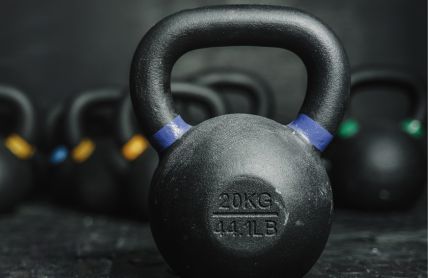
A kettlebell is a cast-iron weight with a handle, resembling a cannonball with a handle on top. Unlike traditional dumbbells or barbells, kettlebells are uniquely designed to be lifted using a swinging motion, which engages multiple muscle groups at once. The shape of the kettlebell, with its off-center weight distribution, allows for dynamic and functional movements that challenge the body in different ways than conventional training equipment.
Kettlebell training typically involves explosive, compound movements that increase strength, improve endurance, and build muscular coordination. These exercises engage the core, hips, legs, arms, and shoulders, providing a total-body workout.
The Anatomy of a Kettlebell
Kettlebells consist of three main components:
-
The Bell: The spherical body of the kettlebell, typically made from cast iron or steel. It contains the majority of the weight, which is distributed in a way that shifts during the swing.
-
The Handle: The handle is the top portion of the kettlebell that you grip with your hands. It is designed to be large enough to allow for a secure, comfortable grip and is often slightly curved for ergonomics.
-
The Base: The flat bottom of the kettlebell that allows it to stand on the floor when not in use. A stable base is essential to keep the kettlebell from tipping over and to ensure safe storage.
A Brief History of Kettlebells
Kettlebells have been used for centuries, with their origins tracing back to Russia in the 18th century. Originally used by Russian farmers and strongmen to improve physical fitness, kettlebells were employed in strongman competitions and military training. They gained wider recognition in the West in the early 2000s, especially with the introduction of the kettlebell swing, a movement that quickly became popular due to its effectiveness in building explosive power and functional strength.
Kettlebells are now a staple in fitness training and have transcended their origins to become a go-to tool for athletes, fitness enthusiasts, and anyone looking for a full-body workout.
Benefits of Kettlebell Training
Kettlebell training offers numerous benefits that make it an attractive option for a wide range of fitness levels. Here are some of the key benefits:
1. Full-Body Conditioning
Kettlebell exercises are typically compound movements, meaning they engage multiple muscle groups at once. Whether you’re performing a swing, snatch, or clean, kettlebell exercises work the hips, legs, core, back, and shoulders, leading to a complete, total-body workout. This full-body engagement helps improve muscle strength, power, and endurance.
2. Functional Strength
Kettlebell training is known for improving functional strength, which is the type of strength that enhances real-life movements and activities. The dynamic, swinging nature of kettlebell exercises mimics natural human motions, such as bending, twisting, and rotating. As a result, kettlebell training improves your ability to perform everyday tasks and athletic movements, from lifting groceries to sprinting.
3. Cardiovascular Fitness
Many kettlebell exercises combine strength training with aerobic activity. Movements like kettlebell swings and snatches are performed in a fast-paced, high-intensity manner, which raises the heart rate and boosts cardiovascular fitness. These exercises provide the benefits of both resistance training and aerobic conditioning, often referred to as “metabolic conditioning” or “metcon.”
4. Improved Core Stability
Kettlebell movements require a significant amount of core engagement. During many exercises, the core acts as a stabilizer to maintain proper posture and protect the lower back. Over time, kettlebell training can lead to enhanced core strength and stability, which translates into better posture, improved balance, and reduced risk of injury.
5. Increased Flexibility and Mobility
The dynamic movements involved in kettlebell training improve flexibility and mobility in key areas, particularly the hips, shoulders, and hamstrings. Movements such as the kettlebell swing require the hips to open and close with fluidity, helping to improve the range of motion and reduce stiffness.
6. Fat Loss and Muscle Definition
Kettlebell exercises are often performed in a high-intensity, circuit-style format, making them ideal for burning calories and promoting fat loss. Due to their metabolic conditioning benefits, kettlebell workouts can elevate your heart rate, leading to a higher calorie burn both during and after the workout. Additionally, the total-body nature of kettlebell exercises helps develop lean muscle, resulting in improved muscle tone and definition.
Different Types of Kettlebells
Kettlebells come in various shapes, sizes, and materials. While the traditional kettlebell is made from cast iron, modern kettlebells can also be made from other materials such as rubber or steel. Here are the main types of kettlebells you might encounter:
1. Traditional Cast-Iron Kettlebells
These are the most common kettlebells found in gyms and home fitness setups. They are made of solid cast iron and have a simple, functional design. Cast-iron kettlebells are durable and long-lasting, making them a great choice for heavy lifting.
2. Competition Kettlebells
Competition kettlebells are designed for use in kettlebell sport competitions. They are made of steel, which makes them more durable and consistent in size, regardless of the weight. Competition kettlebells have a uniform size and are typically used for exercises like the kettlebell snatch and clean & jerk. The handle is often larger in diameter, providing a better grip during high-intensity movements.
3. Rubber-Coated Kettlebells
Rubber-coated kettlebells have a layer of rubber covering the bell. This provides extra protection for both the kettlebell and your floor. These kettlebells are quieter than cast-iron kettlebells when dropped, making them a good option for home gyms or areas with wood flooring.
4. Adjustable Kettlebells
Adjustable kettlebells are designed for people who want the flexibility to change the weight of their kettlebell. These kettlebells have removable weight plates that can be added or removed to adjust the overall load. Adjustable kettlebells are convenient for those with limited space and budget, as they allow for a range of weights in a single kettlebell.
Popular Kettlebell Exercises
Kettlebells can be used for a variety of exercises that target different muscle groups. Here are some of the most effective kettlebell exercises to include in your routine:
1. Kettlebell Swing
The kettlebell swing is one of the most iconic kettlebell exercises and a fundamental movement in kettlebell training. It primarily targets the glutes, hamstrings, and core while providing a cardiovascular workout.
How to Perform:
- Stand with your feet shoulder-width apart, holding a kettlebell with both hands in front of you.
- Hinge at the hips (not the knees), swinging the kettlebell between your legs.
- Drive through your hips, thrusting them forward to swing the kettlebell to chest height.
- Control the descent and repeat.
2. Kettlebell Goblet Squat
The goblet squat is a squat variation that targets the quads, glutes, and core. Holding the kettlebell at chest height adds an extra challenge for the upper body and engages the core.
How to Perform:
- Hold a kettlebell by the handles close to your chest with both hands.
- Lower your body into a squat, keeping your chest upright and knees behind your toes.
- Push through your heels to return to the starting position.
3. Kettlebell Clean and Press
The clean and press is a dynamic exercise that targets the shoulders, core, and legs. It involves lifting the kettlebell from the ground to the shoulder (clean) and then pressing it overhead.
How to Perform:
- Stand with your feet shoulder-width apart and the kettlebell on the floor in front of you.
- Perform a hip hinge to pick up the kettlebell, cleaning it to your shoulder by explosively pulling the kettlebell upward.
- Press the kettlebell overhead by extending your arms.
- Lower the kettlebell back to the shoulder and then to the floor.
4. Kettlebell Snatch
The kettlebell snatch is an advanced movement that targets the shoulders, core, and legs. It involves swinging the kettlebell from between your legs to overhead in one fluid motion.
How to Perform:
- Begin with the kettlebell between your legs and your feet shoulder-width apart.
- Hinge at the hips to swing the kettlebell between your legs.
- As you drive through your hips, use the momentum to propel the kettlebell overhead in one motion.
- Lower the kettlebell back down and repeat.
5. Kettlebell Turkish Get-Up
The Turkish get-up is a full-body movement that improves mobility, stability, and strength. It targets the core, shoulders, and hips.
How to Perform:
- Start lying on your back with one kettlebell held overhead in one hand.
- Use your free hand and leg to push yourself up into a seated position, then onto your knee, and finally standing.
- Reverse the movement to return to the starting position.
How to Incorporate Kettlebells into Your Routine
Kettlebells can be used in a variety of ways to complement your training. Here are some ways to incorporate kettlebells into your workout routine:
1. Circuit Training
Incorporate kettlebell exercises into a high-intensity circuit workout. Perform a series of kettlebell exercises in succession, targeting different muscle groups, with little rest in between. This can improve both strength and cardiovascular fitness.
2. Strength Training
Use kettlebells for strength training by performing exercises like the kettlebell deadlift, kettlebell press, and kettlebell squats. Perform these exercises for sets and reps to build muscle and strength.
3. HIIT Workouts
Kettlebells are perfect for high-intensity interval training (HIIT). Alternate between short bursts of kettlebell exercises and rest periods to maximize calorie burn and improve cardiovascular fitness.
4. Functional Fitness
Incorporate kettlebells into functional training routines that focus on improving coordination, balance, and stability. Exercises like the kettlebell swing and Turkish get-up help build functional strength that transfers into real-life activities.
Conclusion
Kettlebells are a powerful and versatile tool for improving strength, cardiovascular fitness, flexibility, and overall performance. Whether you’re training for a sport, improving your fitness, or just looking for a fun way to stay active, kettlebells provide an effective and efficient workout. By incorporating kettlebell exercises into your routine, you can achieve a full-body workout that challenges your muscles and enhances your overall functional fitness.