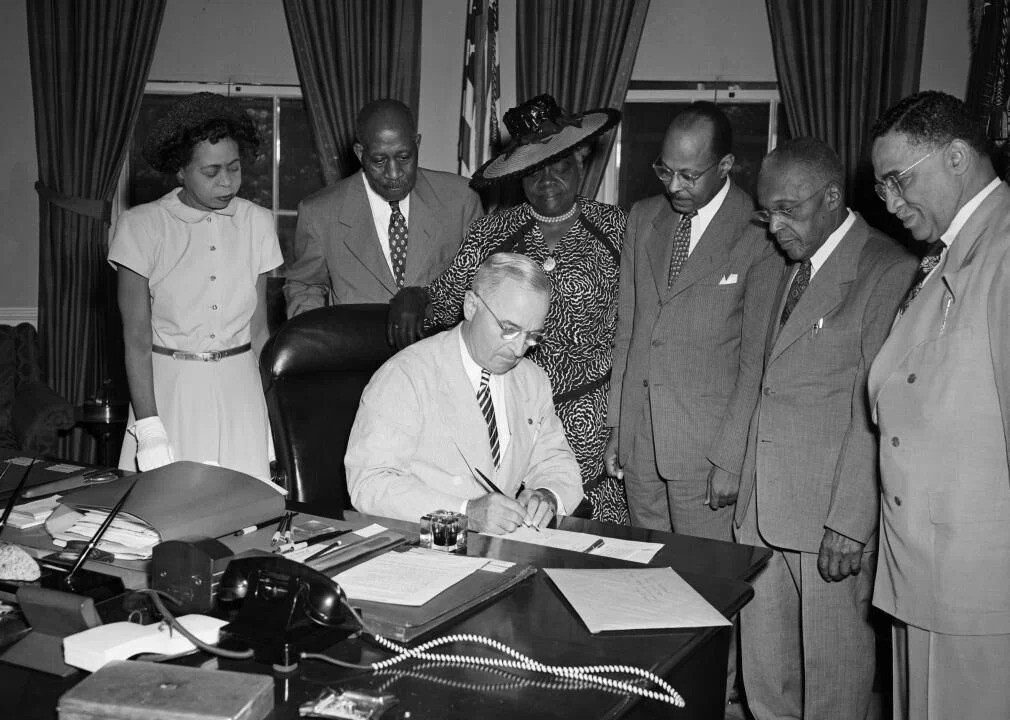
madtechventures.com – When we think of Harry S. Truman, many of us recall his decisive leadership during the final stages of World War II, his role in shaping the early Cold War, and his famous decision to drop the atomic bomb. But another vital aspect of his presidency was his bold stand on civil rights, particularly when it came to the issue of racial segregation in the United States military. Truman’s leadership on the desegregation of the armed forces not only had a profound impact on the military but also played a key role in the larger civil rights movement that would gain momentum in the 1950s and 1960s.
Truman’s executive order to desegregate the armed forces was a crucial moment in U.S. history—a moment that signaled the beginning of the federal government’s active role in fighting racial discrimination. This decision was both a product of its time and a defining step in the long road toward racial equality in America.
The State of Segregation in the U.S. Military
Before World War II, the U.S. military was deeply segregated. African American soldiers served in separate units, often in roles that were considered secondary or less important. They were denied the same training, leadership opportunities, and combat duties that their white counterparts enjoyed. In many cases, African American soldiers were relegated to non-combat roles such as cooks, stewards, and laborers. Despite their bravery and dedication, they were treated as second-class citizens within the military, and often subjected to discrimination and harsh treatment from their fellow soldiers and superiors.
However, during World War II, African American soldiers proved themselves in a number of critical roles. The Tuskegee Airmen, for example, became one of the most famous and respected groups of African American pilots in U.S. history, showing exceptional skill and courage in combat. While the war helped to push back some of the racial barriers in the military, segregation remained a deeply entrenched institution.
When Truman took office in 1945, he inherited a military that was still segregated and a nation where racial inequality was widespread. Despite the growing calls for civil rights reform, racism was deeply rooted in many aspects of American society, and the military was no exception.
Truman’s Civil Rights Commitments
When Truman became president, he found himself in a moment of historical transition. The horrors of war had raised awareness about the fight for freedom and equality abroad, and many Americans began to realize that the principles they fought for overseas should be extended to their own citizens, regardless of race. Truman was personally moved by the injustices faced by African Americans, and he had already begun making steps toward civil rights reform even before he became president.
In 1946, Truman established the President’s Committee on Civil Rights, which issued a report called “To Secure These Rights.” This report highlighted the many racial inequalities in the U.S., including voter disenfranchisement, unequal educational opportunities, and segregation in the military. The committee called for sweeping reforms and laid the foundation for a more active federal government role in advancing civil rights.
Truman’s growing awareness of these issues, paired with his political ambition and belief in American democracy, prompted him to make a bold move on racial integration in the military—a decision that would have far-reaching consequences for both the armed forces and the civil rights movement.
The Executive Order: Desegregating the Military
Truman’s decision to desegregate the U.S. military came on July 26, 1948, with the signing of Executive Order 9981. This executive order called for the elimination of racial segregation in the armed forces and mandated that the military provide equal treatment and opportunity to all personnel, regardless of race, color, religion, or national origin.
The order stated that the President, through the newly created Armed Forces Integration Committee, would oversee the process of integration. The committee was tasked with establishing policies that would allow for the fair treatment of all servicemen and women, including ensuring that they had equal access to training, leadership roles, and combat assignments.
Truman’s executive order was groundbreaking for several reasons. First, it marked a direct federal intervention to dismantle one of the most entrenched forms of institutional racism in the country—the racial segregation of the U.S. military. Second, it sent a powerful message to the nation and the world that the United States, despite its shortcomings, was committed to the ideals of democracy and equality.
However, while the order was a historic step, it was not an immediate or complete solution to racial inequality in the military. The military leadership at the time was resistant to change, and many generals and officers did not support the desegregation effort. In fact, full integration of the armed forces did not occur overnight—it took several years for the military to implement the necessary changes and for African American soldiers to be fully integrated into regular units.
Truman’s Legacy on Civil Rights
Truman’s decision to desegregate the military was one of the first significant acts of civil rights reform during the post-war era, and it set the stage for future advancements in racial equality. By taking this step, Truman broke down barriers and created a precedent for future presidents to follow. Though the military remained segregated for a time, Truman’s executive order laid the groundwork for the eventual full integration of the armed forces.
In addition to desegregation, Truman’s leadership helped set the tone for the civil rights movement of the 1950s and 1960s. His action encouraged future activism and provided a model for how federal leadership could influence positive change in society. The desegregation of the armed forces became one of the milestones that would lead to further efforts in racial integration and equality, both in the military and across the nation.
The Impact on the Armed Forces
The desegregation of the U.S. military had lasting effects on both the military and broader American society. While full integration did not happen overnight, the process began with Executive Order 9981. By the Korean War, African American soldiers were integrated into regular army units, and they proved themselves in combat, earning the respect of their fellow soldiers and superiors.
Furthermore, the military’s integration served as a model for other institutions in America. As African Americans gained access to better opportunities within the armed forces, it also helped to push forward the push for civil rights legislation in the broader society. The momentum created by Truman’s decision was one of the key factors in the success of the civil rights movement, which would eventually lead to landmark changes, such as the Civil Rights Act of 1964 and the Voting Rights Act of 1965.
Conclusion: Truman’s Bold Stand for Equality
At madtechventures.com, we recognize that Harry S. Truman’s decision to desegregate the armed forces was a courageous and forward-thinking action that helped to reshape the landscape of American society. Although Truman’s stand was just one piece of the larger civil rights movement, it was a crucial step that proved the federal government could—and should—play an active role in fighting racial inequality.
Truman’s leadership in this area stands as a testament to the power of presidential action in advancing social change. By desegregating the military, he not only contributed to the progress of civil rights but also set an example of moral courage for future generations. Harry S. Truman’s decision was more than just about the armed forces; it was about America’s ideals and the belief that the pursuit of justice and equality is never truly finished.
