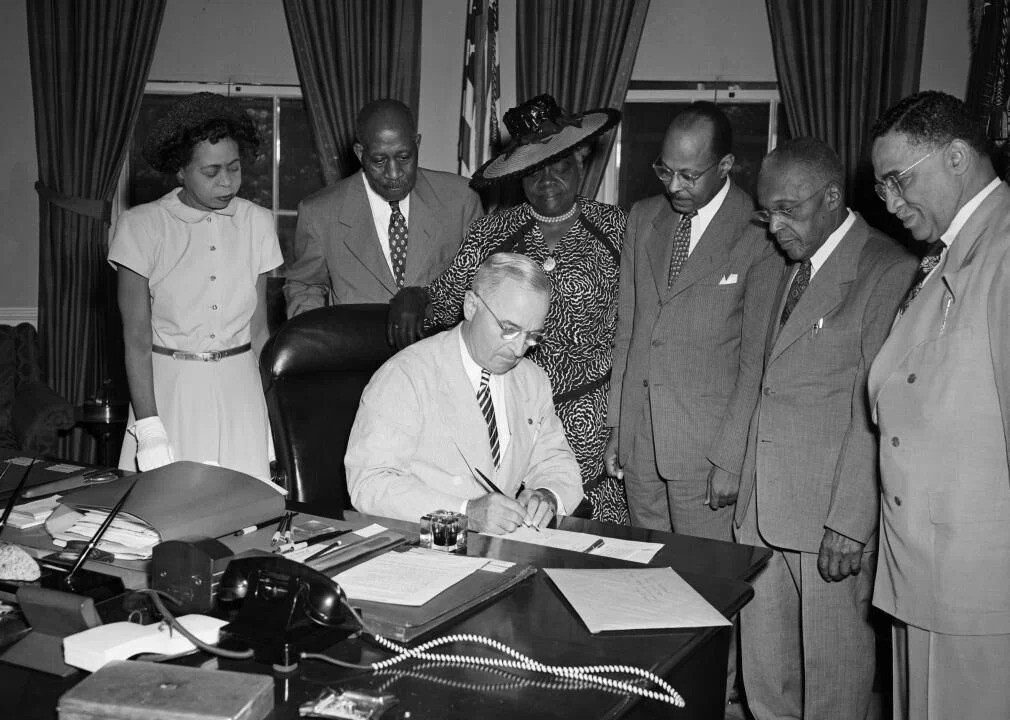
Truman and the Desegregation of the Armed Forces

madtechventures.com – When we think of Harry S. Truman, many of us recall his decisive leadership during the final stages of World War II, his role in shaping the early Cold War, and his famous decision to drop the atomic bomb. But another vital aspect of his presidency was his bold stand on civil rights, particularly when it came to the issue of racial segregation in the United States military. Truman’s leadership on the desegregation of the armed forces not only had a profound impact on the military but also played a key role in the larger civil rights movement that would gain momentum in the 1950s and 1960s.

Truman’s executive order to desegregate the armed forces was a crucial moment in U.S. history—a moment that signaled the beginning of the federal government’s active role in fighting racial discrimination. This decision was both a product of its time and a defining step in the long road toward racial equality in America.

The State of Segregation in the U.S. Military

Before World War II, the U.S. military was deeply segregated. African American soldiers served in separate units, often in roles that were considered secondary or less important. They were denied the same training, leadership opportunities, and combat duties that their white counterparts enjoyed. In many cases, African American soldiers were relegated to non-combat roles such as cooks, stewards, and laborers. Despite their bravery and dedication, they were treated as second-class citizens within the military, and often subjected to discrimination and harsh treatment from their fellow soldiers and superiors.

However, during World War II, African American soldiers proved themselves in a number of critical roles. The Tuskegee Airmen, for example, became one of the most famous and respected groups of African American pilots in U.S. history, showing exceptional skill and courage in combat. While the war helped to push back some of the racial barriers in the military, segregation remained a deeply entrenched institution.

When Truman took office in 1945, he inherited a military that was still segregated and a nation where racial inequality was widespread. Despite the growing calls for civil rights reform, racism was deeply rooted in many aspects of American society, and the military was no exception.

Truman’s Civil Rights Commitments

When Truman became president, he found himself in a moment of historical transition. The horrors of war had raised awareness about the fight for freedom and equality abroad, and many Americans began to realize that the principles they fought for overseas should be extended to their own citizens, regardless of race. Truman was personally moved by the injustices faced by African Americans, and he had already begun making steps toward civil rights reform even before he became president.

In 1946, Truman established the President’s Committee on Civil Rights, which issued a report called “To Secure These Rights.” This report highlighted the many racial inequalities in the U.S., including voter disenfranchisement, unequal educational opportunities, and segregation in the military. The committee called for sweeping reforms and laid the foundation for a more active federal government role in advancing civil rights.

Truman’s growing awareness of these issues, paired with his political ambition and belief in American democracy, prompted him to make a bold move on racial integration in the military—a decision that would have far-reaching consequences for both the armed forces and the civil rights movement.

The Executive Order: Desegregating the Military

Truman’s decision to desegregate the U.S. military came on July 26, 1948, with the signing of Executive Order 9981. This executive order called for the elimination of racial segregation in the armed forces and mandated that the military provide equal treatment and opportunity to all personnel, regardless of race, color, religion, or national origin.

The order stated that the President, through the newly created Armed Forces Integration Committee, would oversee the process of integration. The committee was tasked with establishing policies that would allow for the fair treatment of all servicemen and women, including ensuring that they had equal access to training, leadership roles, and combat assignments.

Truman’s executive order was groundbreaking for several reasons. First, it marked a direct federal intervention to dismantle one of the most entrenched forms of institutional racism in the country—the racial segregation of the U.S. military. Second, it sent a powerful message to the nation and the world that the United States, despite its shortcomings, was committed to the ideals of democracy and equality.

However, while the order was a historic step, it was not an immediate or complete solution to racial inequality in the military. The military leadership at the time was resistant to change, and many generals and officers did not support the desegregation effort. In fact, full integration of the armed forces did not occur overnight—it took several years for the military to implement the necessary changes and for African American soldiers to be fully integrated into regular units.

Truman’s Legacy on Civil Rights

Truman’s decision to desegregate the military was one of the first significant acts of civil rights reform during the post-war era, and it set the stage for future advancements in racial equality. By taking this step, Truman broke down barriers and created a precedent for future presidents to follow. Though the military remained segregated for a time, Truman’s executive order laid the groundwork for the eventual full integration of the armed forces.

In addition to desegregation, Truman’s leadership helped set the tone for the civil rights movement of the 1950s and 1960s. His action encouraged future activism and provided a model for how federal leadership could influence positive change in society. The desegregation of the armed forces became one of the milestones that would lead to further efforts in racial integration and equality, both in the military and across the nation.

The Impact on the Armed Forces

The desegregation of the U.S. military had lasting effects on both the military and broader American society. While full integration did not happen overnight, the process began with Executive Order 9981. By the Korean War, African American soldiers were integrated into regular army units, and they proved themselves in combat, earning the respect of their fellow soldiers and superiors.

Furthermore, the military’s integration served as a model for other institutions in America. As African Americans gained access to better opportunities within the armed forces, it also helped to push forward the push for civil rights legislation in the broader society. The momentum created by Truman’s decision was one of the key factors in the success of the civil rights movement, which would eventually lead to landmark changes, such as the Civil Rights Act of 1964 and the Voting Rights Act of 1965.

Conclusion: Truman’s Bold Stand for Equality

At madtechventures.com, we recognize that Harry S. Truman’s decision to desegregate the armed forces was a courageous and forward-thinking action that helped to reshape the landscape of American society. Although Truman’s stand was just one piece of the larger civil rights movement, it was a crucial step that proved the federal government could—and should—play an active role in fighting racial inequality.

Truman’s leadership in this area stands as a testament to the power of presidential action in advancing social change. By desegregating the military, he not only contributed to the progress of civil rights but also set an example of moral courage for future generations. Harry S. Truman’s decision was more than just about the armed forces; it was about America’s ideals and the belief that the pursuit of justice and equality is never truly finished.
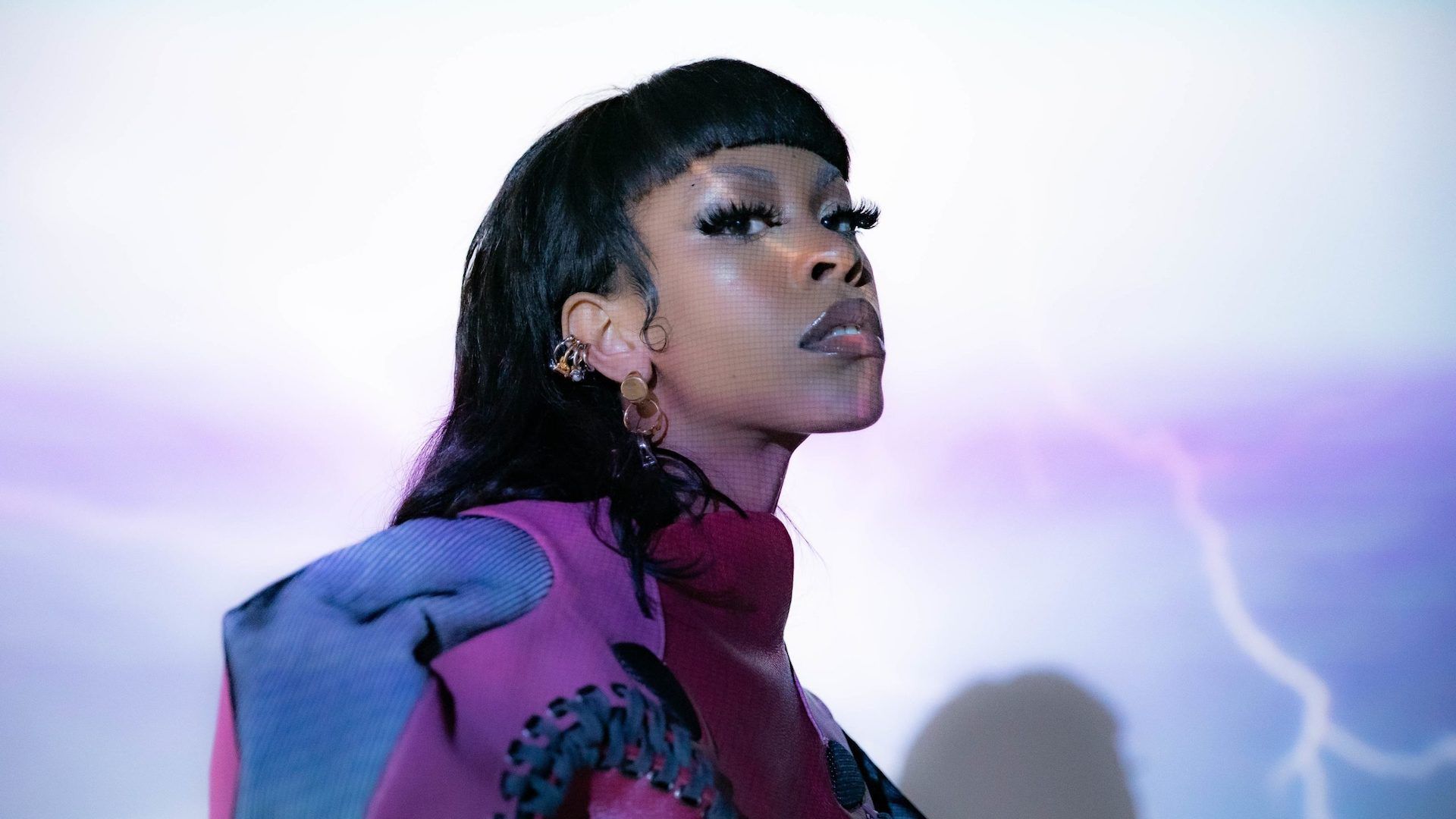
Rico Nasty: The Fearless Force Shaping Modern Hip-Hop

madtechventures.com – Rico Nasty, born Maria-Cecilia Simone Kelly on May 7, 1997, in Washington, D.C., has emerged as one of the most dynamic and genre-defying artists in hip-hop today. Known for her high-energy performances, bold aesthetic, and unapologetic approach to both music and life, Rico Nasty has carved out a unique space for herself in the modern music landscape. Her fierce lyricism, punk-inspired sound, and fearless attitude have made her a standout in the rap world, earning her both critical acclaim and a loyal fanbase. As one of the most influential women in contemporary rap, Rico Nasty is reshaping the boundaries of hip-hop with every release.

Early Life and Musical Beginnings

Rico Nasty was raised in the suburbs of Prince George’s County, Maryland, where she was exposed to a wide array of musical influences. From a young age, she was drawn to music, initially starting with a love for rock and punk bands before discovering hip-hop. This diverse musical upbringing would go on to shape her unique style—a blend of gritty rap, energetic punk rock influences, and experimental sounds.

Her first exposure to music was through her father, who was a big fan of rock music, as well as hip-hop icons like Missy Elliott and Lil’ Kim. As a teenager, she began rapping as a way to express her emotions, finding an outlet through lyrics when she was dealing with personal struggles, including the loss of her father and navigating life as a young woman. This cathartic release led her to begin recording her own tracks and uploading them online, gaining early attention for her raw talent and distinctive voice.

Rico Nasty’s early music was heavily influenced by both her rap idols and her affinity for alternative and punk rock sounds, setting her apart from many of her contemporaries. Her eclectic style combined abrasive, aggressive raps with melodic elements, blending genres in a way that felt fresh and exciting.

Breakthrough with Nasty and Anger Management

In 2018, Rico Nasty made a significant impact with the release of her mixtape Nasty. The project showcased her unique ability to mix punk-inspired elements with hardcore rap, resulting in a sound that was both rebellious and infectious. With tracks like “Smack a Bitch” and “Poppin,” Rico Nasty established herself as a bold new voice in hip-hop. The mixtape’s high-energy sound and fiercely independent themes resonated with a wide audience, particularly those who craved something raw and unfiltered.

The success of Nasty helped to establish Rico Nasty as one of the genre’s most exciting new artists, as she consistently pushed boundaries both sonically and visually. Her style was one of defiance and strength, breaking through with lyrics about empowerment, self-confidence, and resilience in the face of adversity. With Nasty, Rico Nasty laid the foundation for her continued growth as an artist.

In 2019, she followed up with Anger Management, a collaborative mixtape with producer Kenny Beats. The project showcased her versatility, as it merged her hard-hitting rap roots with more experimental beats and electronic influences. Songs like “Rage” and “Time Flies” further solidified her place in the rap scene, highlighting her ability to seamlessly switch between aggressive bars and melodic moments, all while maintaining her signature fearless persona.

Punk Rock Aesthetic and Influence on Hip-Hop

What truly sets Rico Nasty apart from many of her peers is her punk rock aesthetic, which permeates both her music and her visual identity. With her brightly colored hair, bold fashion choices, and intense on-stage persona, Rico Nasty has embraced her individuality in a way that has helped her stand out in a crowded rap landscape. She seamlessly blends elements of punk, goth, and alternative culture with hip-hop, creating a persona that challenges traditional gender roles and artistic expectations.

Her punk influence is most evident in her aggressive, high-energy sound, which often feels more akin to a mosh pit than a traditional rap show. Tracks like “Rage” and “Hater” are driven by thrashing beats, distorted basslines, and riotous energy that evoke the spirit of punk rock, while her lyrics exude the same attitude of rebellion and nonconformity that defines the genre. Through this fusion of sounds, Rico Nasty has become an icon for a new generation of fans who crave a more diverse and experimental approach to hip-hop.

In addition to her music, Rico Nasty’s visual aesthetic has helped to cement her place in the intersection of punk and rap. Her music videos are often filled with surreal, high-octane visuals, playing with everything from neon colors to otherworldly settings, making them an integral part of her artistic expression. She is a living embodiment of the punk ethos: rejecting norms, embracing individuality, and creating something new.

Rico Nasty’s Impact on Hip-Hop and Culture

Rico Nasty’s impact on hip-hop goes beyond her music. As one of the few women in rap to combine punk rock influences with hip-hop, she has brought a new dimension to the genre, giving a voice to fans who have long felt underrepresented. Her openness about embracing her uniqueness, both in her style and her music, has made her a role model for young people, especially those who don’t fit into conventional molds.

Her journey as a female artist in the rap game also reflects a broader conversation about gender and identity in hip-hop. Rico Nasty has used her platform to defy expectations about what a woman in rap should be. She is not just a rapper but an embodiment of empowerment, challenging the traditional narratives about women’s roles in hip-hop. Her unapologetic self-expression has inspired other female rappers to embrace their individuality and take risks with their music and public personas.

Moreover, Rico Nasty has gained widespread recognition for her ability to create music that transcends the boundaries of genre, attracting fans from both the hip-hop and alternative music scenes. Her refusal to be confined to one genre has made her a bridge between different musical worlds, and her diverse fanbase is a testament to her broad appeal.

Legacy and Continued Growth

Rico Nasty’s legacy is still being written, but it is clear that she is one of the most exciting and innovative voices in modern hip-hop. With her ability to blend genres, challenge norms, and inspire fans through her authenticity and creativity, she is reshaping the landscape of rap music. As she continues to evolve as an artist, there is no telling how much further Rico Nasty’s influence will spread, but one thing is certain—she will continue to push the boundaries of hip-hop and music as a whole.

Conclusion

Rico Nasty has proven herself to be more than just a rapper—she is an artist, a visionary, and a cultural force. Through her bold music, fearless persona, and boundary-pushing style, she has created a unique space for herself in the world of hip-hop. Her ability to blend punk, rap, and experimental sounds has made her a standout in the genre, while her unapologetic approach to both her music and her image has inspired a new generation of fans and artists. As Rico Nasty continues to carve her path in music, she remains a powerful force in the ongoing evolution of hip-hop.

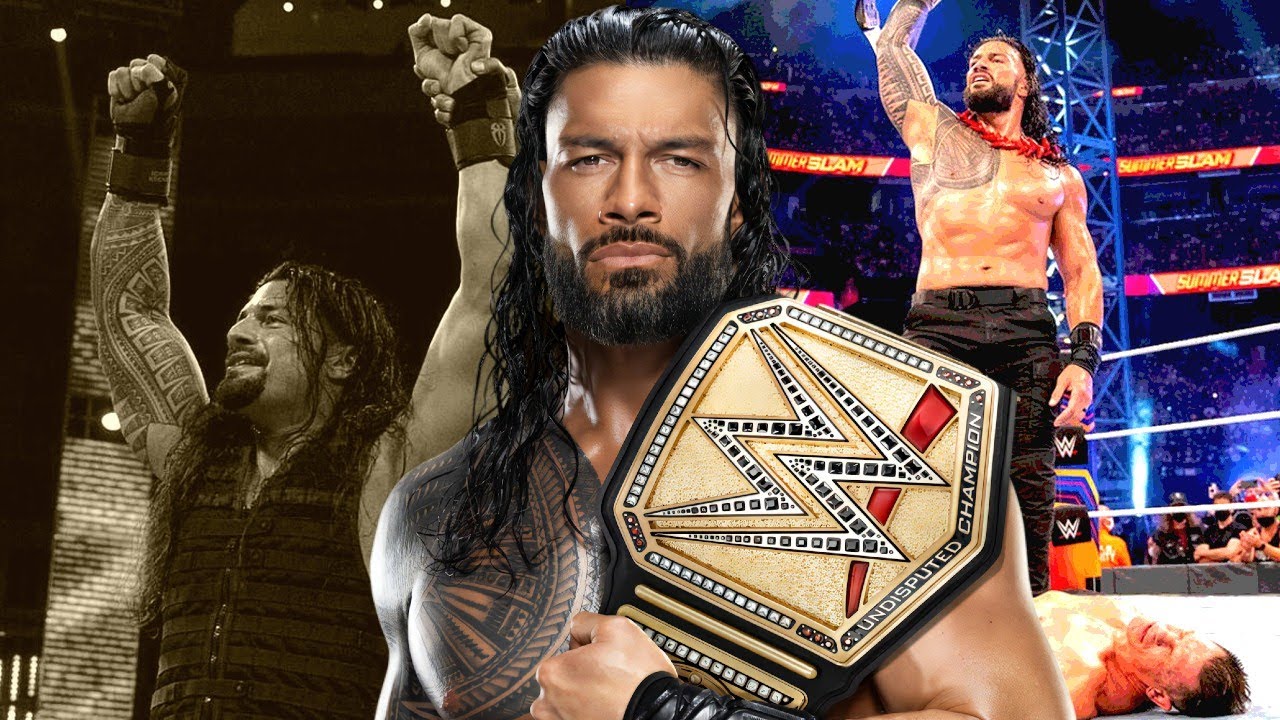
The Dominant Force in WWE: Roman Reigns

madtechventures.com – Roman Reigns, born Leati Joseph Anoa’i on May 25, 1985, in Pensacola, Florida, is a prominent figure in the world of professional wrestling. He is a member of the renowned Anoa’i family, which has produced several notable wrestlers, including his cousin, Dwayne “The Rock” Johnson.

Reigns’ journey in wrestling began in 2010 when he signed with WWE and was initially assigned to the Florida Championship Wrestling (FCW) circuit, which later became NXT. His early career was marked by a series of losses, but he persevered and made his television debut on August 19, 2010, under the name Roman Leakee.

Rise to Prominence

Reigns’ breakthrough came in 2012 when he joined the group known as The Shield alongside Dean Ambrose and Seth Rollins. The Shield quickly became one of the most popular and controversial factions in WWE, known for their aggressive and anti-heroic personas. Reigns’ performance in the 2014 Royal Rumble, where he eliminated 12 competitors, set a new record and significantly boosted his popularity.

Championship Success

Reigns’ career has been defined by his numerous championship victories. He has won the WWE World Heavyweight Championship four times and the WWE Universal Championship twice, making him a six-time world champion5. Some of his notable victories include:

  • 2015: Defeated Mr. McMahon to win the WWE World Heavyweight Championship.
  • 2016: Defeated Rusev to become the American Champion.
  • 2020: Won the Universal Championship after the brutal match between Bray Wyatt and Braun Strowman.
  • 2022: Unified the WWE Championship and Universal Championship by defeating Brock Lesnar.

Reigns’ longest reign as Universal Champion began on January 18, 2023, when he became the longest reigning champion in the past 30 years, holding the title for 871 days.

Personal Life and Family

Reigns is married to Gaella Baker, and they have five children together. His family background in wrestling and his connection to The Rock have played significant roles in his career and public image.

Legacy and Impact

Roman Reigns has not only achieved great success in the ring but has also become a cultural icon. His performances and character have resonated with fans worldwide, making him one of the most influential figures in WWE history. His ability to captivate audiences and his relentless pursuit of victory have solidified his status as a dominant force in professional wrestling.

Recent Developments

In 2024, Reigns faced a significant challenge when he lost the WWE World Heavyweight Championship to Cody Rhodes at WrestleMania XL. Despite this setback, Reigns continues to be a central figure in WWE, showcasing his resilience and determination to reclaim his title.

Conclusion

Roman Reigns’ journey from a struggling newcomer to a six-time world champion is a testament to his hard work, dedication, and natural talent. His impact on WWE and the broader wrestling community is immeasurable, and his legacy is likely to endure for generations to come.