Lincoln’s Leadership in America’s Darkest Hour

madtechventures.com – Abraham Lincoln, the 16th President of the United States, is often regarded as one of the greatest leaders in history. His leadership during the American Civil War — a period of profound national crisis — is widely considered a defining moment not just in his presidency, but in the history of the United States itself. Lincoln’s ability to guide the nation through its darkest hour, characterized by political strife, widespread violence, and the question of slavery, revealed a depth of moral clarity, strategic thinking, and unwavering resolve. This article delves into the nature of Lincoln’s leadership during the Civil War, his struggles and decisions, and how he helped the nation emerge stronger, more united, and more just.

The Situation at Lincoln’s Inauguration

A Nation Divided

When Abraham Lincoln assumed office on March 4, 1861, the United States was on the brink of collapse. The issue of slavery had torn the nation apart, and tensions between the Northern states (where slavery was largely abolished) and the Southern states (where slavery was a deeply entrenched institution) were at their peak. Lincoln’s election had sparked outrage in the South, where many saw him as a direct threat to the institution of slavery.

In response to Lincoln’s victory, seven Southern states — South Carolina, Mississippi, Florida, Alabama, Georgia, Louisiana, and Texas — seceded from the Union, forming the Confederate States of America. Despite these dramatic events, Lincoln, in his inaugural address, sought to reassure the South, declaring that he had no intention of interfering with slavery where it already existed, but he also made it clear that secession was illegal and that the Union must be preserved.

Lincoln faced a nation divided, both in its political allegiances and in its fundamental principles. At his inauguration, many in the North were deeply concerned about the possibility of war, while many in the South believed that Lincoln would soon take action to abolish slavery. The stage was set for a struggle that would test the very heart of the American experiment.

Early Challenges and the Outbreak of War

Within weeks of Lincoln’s inauguration, the conflict turned violent. On April 12, 1861, Confederate forces attacked Fort Sumter, a federal military installation in South Carolina. The attack marked the beginning of the Civil War, and Lincoln’s leadership was thrust into action.

In response to the outbreak of hostilities, Lincoln called for 75,000 volunteer soldiers to quell the rebellion, a decision that firmly established his commitment to preserving the Union. As more Southern states seceded and joined the Confederacy, Lincoln’s leadership abilities would be tested to their limits.

A Unified Purpose

One of the defining elements of Lincoln’s leadership was his ability to define a clear, unified purpose for the Union. From the outset of the war, Lincoln framed the conflict as a struggle to preserve the American Union. Despite the deeply ingrained divisions over slavery, Lincoln’s ability to rally the North around the notion that the Union — a nation based on liberty and democracy — must be preserved, became the bedrock of his leadership.

His commitment to saving the Union, regardless of the political or social cost, became evident in his refusal to compromise with the Confederacy. Lincoln faced tremendous pressure, both from radical abolitionists and from those who favored a more conciliatory approach toward the South. He stood firm in his belief that the preservation of the Union was paramount, even if it meant fighting a bloody and protracted war.

Lincoln’s Decision-Making and Leadership Style

The Emancipation Proclamation: A Moral and Military Move

As the war progressed, Lincoln faced the difficult challenge of balancing military strategy with moral imperatives. One of the most significant moments in Lincoln’s leadership came on January 1, 1863, with the issuance of the Emancipation Proclamation. This executive order declared that all enslaved people in Confederate-held territories were to be set free.

While the Emancipation Proclamation was a military strategy — aimed at weakening the Confederate war effort by depriving it of enslaved labor — it was also a moral imperative. Lincoln understood that slavery was not only a political and economic institution, but also a profound moral stain on the nation’s character. By issuing the proclamation, Lincoln took a decisive stand for human rights and equality, signaling to the world that the Union was fighting for the freedom of all its people.

The Emancipation Proclamation had significant consequences for both the war effort and the future of the United States. It shifted the focus of the war, making the abolition of slavery a central goal, and it paved the way for the eventual passage of the 13th Amendment, which would permanently abolish slavery throughout the United States. Lincoln’s decision to act decisively on the issue of slavery, despite the risk of alienating Northern Democrats or losing support from border states, demonstrated his moral clarity and unwavering commitment to the principles of freedom and justice.

Managing the War Effort: Trials and Triumphs

Throughout the Civil War, Lincoln displayed remarkable political and military acumen. He faced numerous challenges, including changing military leadership, fluctuating public opinion, and the pressure of overseeing a war that cost hundreds of thousands of lives. However, one of Lincoln’s greatest strengths was his ability to learn from his mistakes and adapt quickly. He was willing to make difficult decisions and to change course when necessary.

One of the most notable examples of Lincoln’s leadership during the war was his management of the Union Army. Initially, Lincoln struggled to find competent military leaders who could lead the Union forces to victory. He cycled through several generals who failed to meet his expectations, but eventually, he found a leader in Ulysses S. Grant, who shared Lincoln’s determination to win the war and preserve the Union. Grant’s victories at battles such as Vicksburg and Chattanooga were critical to the Union’s eventual success.

In addition to his military decisions, Lincoln also had to navigate the complex political landscape. He balanced the demands of various factions within the Republican Party, dealt with the pressures from abolitionists, and sought to maintain unity in the North. Lincoln often had to make difficult political compromises, but he never wavered from his primary goal of preserving the Union.

Lincoln’s Communication and Vision

Lincoln’s ability to communicate with the American people was another key element of his leadership. He understood the power of words, and his speeches became a rallying cry for the Union cause. The Gettysburg Address, delivered on November 19, 1863, is perhaps the most famous example of his eloquence. In just a few short paragraphs, Lincoln encapsulated the moral stakes of the war, while reaffirming the nation’s commitment to democracy and liberty.

In the Gettysburg Address, Lincoln famously declared, “That this nation, under God, shall have a new birth of freedom — and that government of the people, by the people, for the people, shall not perish from the earth.” These words resonated deeply with Americans, providing a moral framework for the Union war effort and reminding the nation of its higher ideals.

Lincoln’s speeches were not just political documents; they were a reflection of his ability to connect with the people, inspire them, and call them to action. Throughout the war, he maintained his focus on the ideals of freedom, democracy, and equality, which helped galvanize public support for the Union cause.

The Toll of Leadership

Personal Struggles

While Lincoln’s leadership during the Civil War was exceptional, it came at great personal cost. Lincoln was a man of deep emotional complexity, and the stress of leading the nation through such a devastating conflict took a heavy toll on him. He suffered from bouts of depression, and the weight of the war — both its human cost and its moral implications — often left him emotionally drained.

In addition to the pressure of the war, Lincoln also faced profound personal tragedy. He lost his 11-year-old son, Willie, to a fever in 1862, a loss that deeply affected him and his wife, Mary Todd Lincoln. The constant strain of dealing with grief, war, and political strife often left Lincoln weary, yet he continued to demonstrate incredible fortitude and resolve.

The Assassination: The End of Lincoln’s Journey

After four years of relentless leadership, Lincoln’s vision of a restored Union was becoming a reality. In the spring of 1865, the Confederate Army was in retreat, and the Union was on the verge of victory. Lincoln’s leadership had brought the nation to the brink of peace and reconciliation. But, tragically, he would not live to see the full realization of his efforts.

On April 14, 1865, just days after General Robert E. Lee’s surrender at Appomattox Court House, Lincoln was assassinated by John Wilkes Booth while attending a play at Ford’s Theatre in Washington, D.C. Lincoln died the following day, leaving the nation to mourn the loss of its leader.

Legacy of Leadership: A Nation Reborn

Abraham Lincoln’s leadership during America’s darkest hour is widely regarded as one of the most extraordinary in history. He preserved the Union, ended slavery, and ensured that the principles of liberty and democracy would remain at the heart of the American experiment. His moral clarity, ability to make tough decisions, and commitment to the ideals of equality and freedom have left an enduring legacy.

Lincoln’s leadership was not just about winning a war; it was about leading a nation toward its highest ideals. His vision of a government “of the people, by the people, for the people” continues to inspire leaders and citizens alike, reminding us all of the potential for good in even the darkest times.

Conclusion

Abraham Lincoln’s leadership during the American Civil War stands as a testament to the power of moral clarity, resilience, and vision in times of crisis. He guided the United States through its most trying period, ensuring that the nation remained united and committed to the ideals of freedom and equality. Though he did not live to see the full fruits of his labor, Lincoln’s leadership helped to shape the future of the nation, leaving a legacy that endures to this day.
The Leadership of Franklin Pierce: Vision, Politics, and Failure

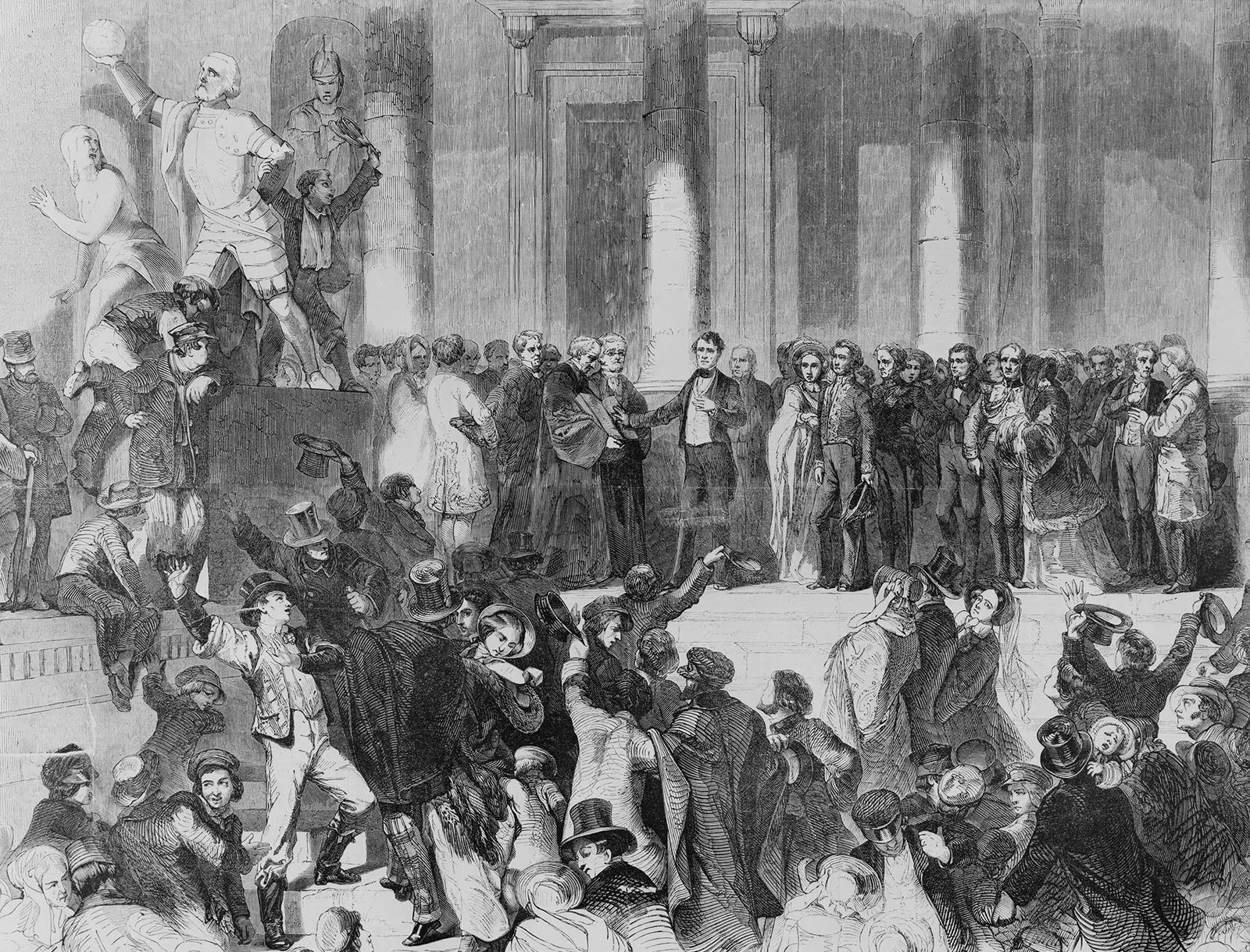
madtechventures.com – Franklin Pierce, the 14th President of the United States, is often regarded as a tragic and enigmatic figure in American history. His leadership, while marked by personal ambition and a deep desire to maintain national unity, ultimately failed to prevent the sectional divisions that led to the Civil War. Known for his moderate stances, political compromises, and Southern sympathies, Pierce’s presidency was defined by controversial decisions, particularly regarding the issue of slavery. Though he came to office with hopes of healing a nation increasingly torn apart by the question of slavery’s expansion, his leadership ultimately fell short of averting the cataclysmic conflict that loomed on the horizon.

This article delves into Franklin Pierce’s leadership style, examining his political vision, his approach to governance, and the factors that led to his political failure. By analyzing his actions during his time in office, particularly with regard to the Kansas-Nebraska Act, the expansion of slavery, and his inability to unite a divided nation, we can better understand how Franklin Pierce became a leader whose good intentions were undone by his inability to navigate the fracturing political landscape of the antebellum United States.

Early Life and Political Background: The Foundations of Leadership

A Promising Start

Franklin Pierce’s early life and career hinted at a bright political future. Born in 1804 in Hillsborough, New Hampshire, he was the son of Benjamin Pierce, a Revolutionary War hero and former governor of New Hampshire. Raised in a family with strong political ties, Franklin Pierce was groomed for public life from an early age. He attended Bowdoin College, where he excelled academically and formed lifelong friendships with several prominent individuals, including Nathaniel Hawthorne, who would later become his biographer.

Pierce’s early political career was equally promising. After studying law, he was elected to the New Hampshire legislature at age 23. He later served in the U.S. House of Representatives and the U.S. Senate, where he earned a reputation as a moderate Democrat who was willing to work across party lines. He was a supporter of President Andrew Jackson and the Jacksonian principles of limited government and territorial expansion. However, despite his political success, Pierce’s life was marked by tragedy, particularly the death of his young son, which deeply affected his emotional and psychological well-being.

Military Service and Rise to Prominence

Pierce’s political trajectory took a significant turn during the Mexican-American War (1846-1848), where he served as a brigadier general. Although he was wounded in battle and did not achieve significant military distinction, Pierce’s service in the war helped bolster his national profile. Upon his return to the United States, he gained recognition as a war hero, which provided a platform for his political aspirations.

By the early 1850s, Pierce had positioned himself as a strong candidate for the presidency. His political ideology, though rooted in the Democratic Party, was increasingly shaped by his belief in the necessity of national compromise and his moderate stance on issues such as slavery. He was a man of consensus, seeking to bridge the growing divide between the North and South, though this effort would ultimately prove insufficient in the face of the intensifying sectional crisis.

Pierce’s Vision for the Presidency: Moderation and National Unity

The Democratic Party and the 1852 Election

In the 1852 Democratic National Convention, Franklin Pierce emerged as the party’s nominee for president after several ballots failed to yield a consensus candidate. The Democrats were looking for a moderate who could unite the party’s northern and southern factions in an era of rising sectionalism. Pierce, who had a reputation for political flexibility, was chosen as a compromise candidate. His platform, while vague on the issue of slavery, promised to preserve national unity and maintain the status quo in the face of growing tensions between free and slave states.

The 1852 election itself was one of significant partisan realignment. The Whig Party, weakened by internal divisions over slavery, was unable to mount a strong challenge, and Pierce won the election in a landslide. His victory was seen as a triumph for Democratic unity, but it also signaled the deepening divisions within the country that would soon lead to the unraveling of the national political system.

The Dilemma of Slavery and Sectionalism

At the heart of Pierce’s vision for the presidency was a desire to avoid the issue of slavery and prevent it from becoming a divisive force in American politics. Pierce believed that the best way to maintain the Union was to placate the South and allow for the expansion of slavery into the new territories, particularly those gained through the Mexican-American War. This was consistent with his broader belief in the Jacksonian ideals of territorial expansion and the preservation of the Union at all costs.

However, this approach was a profound miscalculation. Slavery had become a moral, political, and economic issue that could not be avoided or compromised away. The North was growing increasingly opposed to the expansion of slavery, and anti-slavery movements were gaining strength. By siding with Southern interests, Pierce alienated many in the North, including his own party members, who viewed his policies as a betrayal of free-soil principles. The lack of a clear and forceful stance on slavery would prove to be one of the key factors contributing to his political downfall.

The Kansas-Nebraska Act: A Critical Failure of Leadership

The Introduction of the Kansas-Nebraska Act

Pierce’s presidency was defined by the introduction of the Kansas-Nebraska Act in 1854, a piece of legislation that allowed the territories of Kansas and Nebraska to decide for themselves whether to permit slavery, effectively repealing the Missouri Compromise of 1820, which had prohibited slavery in most of the northern territories. The Act, championed by Illinois Senator Stephen A. Douglas, was designed to open up new lands for settlement and expansion, but it had the unintended consequence of reigniting the debate over slavery’s expansion.

Pierce, who was eager to support Southern interests, fully backed the Kansas-Nebraska Act, believing that it would help maintain national unity by allowing settlers in the territories to decide the issue of slavery for themselves. However, his support for the Act backfired. It provoked widespread opposition in the North, where many viewed it as an attempt to expand slavery into new territories and increase the political power of the South. The Act sparked violent confrontations between pro-slavery and anti-slavery settlers in Kansas, leading to the bloody period known as “Bleeding Kansas.”

The Divisiveness of the Kansas-Nebraska Act

The passage of the Kansas-Nebraska Act divided the nation along sectional lines, intensifying the already existing tensions between North and South. In the North, the Act was seen as a blatant capitulation to the slaveholding South, while in the South, it was celebrated as a victory for the right of states to determine their own fate with regard to slavery. Pierce’s support for the Act, which alienated large segments of Northern Democrats and Whigs, further fractured the political landscape.

The violence in Kansas, where pro-slavery forces clashed with anti-slavery settlers, highlighted Pierce’s failure to understand the deep moral and political divisions over slavery. The resulting chaos in Kansas undermined Pierce’s credibility and left him unable to assert control over the growing sectional crisis. Pierce’s indecisiveness and his inability to provide strong leadership in the face of violence and instability contributed to the collapse of the Whig Party and the rise of the Republican Party, which was founded on an anti-slavery platform.

Pierce’s Political Decline: A Presidency in Freefall

The Collapse of the Whig Party

The political fallout from the Kansas-Nebraska Act, combined with Pierce’s inability to unite his party and address the country’s deepening divisions, led to the collapse of the Whig Party. Many Northern Whigs, who had previously supported Pierce, defected to the Republican Party, which was rapidly gaining momentum as a political force dedicated to halting the expansion of slavery. Pierce’s failure to recognize the power of the anti-slavery movement and his loyalty to the Southern states caused him to lose the support of key constituencies in the North.

As a result, Pierce became increasingly isolated. His approval ratings plummeted, and his leadership was no longer seen as capable of preserving national unity. In 1856, the Democratic Party nominated James Buchanan to run for president, signaling the end of Pierce’s political career. The rise of the Republican Party and the success of anti-slavery candidates left Pierce’s legacy in tatters.

The Legacy of a Failed Presidency

Pierce’s presidency ended in failure, and he left office in 1857 with little to show for his time in power. His attempts to maintain national unity through political compromise were unsuccessful in the face of the rising tide of sectionalism. The political divisions over slavery, territorial expansion, and states’ rights deepened during his time in office, and Pierce’s leadership failed to offer solutions to the pressing issues facing the nation.

Historians have often described Franklin Pierce as a well-meaning but ultimately ineffective leader. His presidency serves as a cautionary tale about the dangers of political moderation in a time of profound moral and political crisis. Pierce’s failure to address the fundamental issues dividing the country left him with a fractured legacy and contributed to the political instability that would culminate in the Civil War.

Conclusion: A Leadership Defined by Failure

Franklin Pierce’s presidency is one of the most tragic chapters in American history. His vision of maintaining national unity through compromise and moderation was noble, but his inability to address the growing divisions over slavery ultimately led to his downfall. His leadership, marked by political miscalculations, failure to understand the moral imperative of the anti-slavery movement, and lack of decisive action in the face of violence and political fragmentation, left a nation on the brink of civil war.

Pierce’s legacy is one of missed opportunities, compromised principles, and a failure to recognize the deepening crisis that threatened the Union. His presidency serves as a reminder of the fragility of national unity and the consequences of leadership that fails to confront the fundamental moral and political questions of its time. Franklin Pierce’s political journey, from hopeful compromise to tragic failure, remains a cautionary tale about the limitations of moderation in an era of intense ideological division.