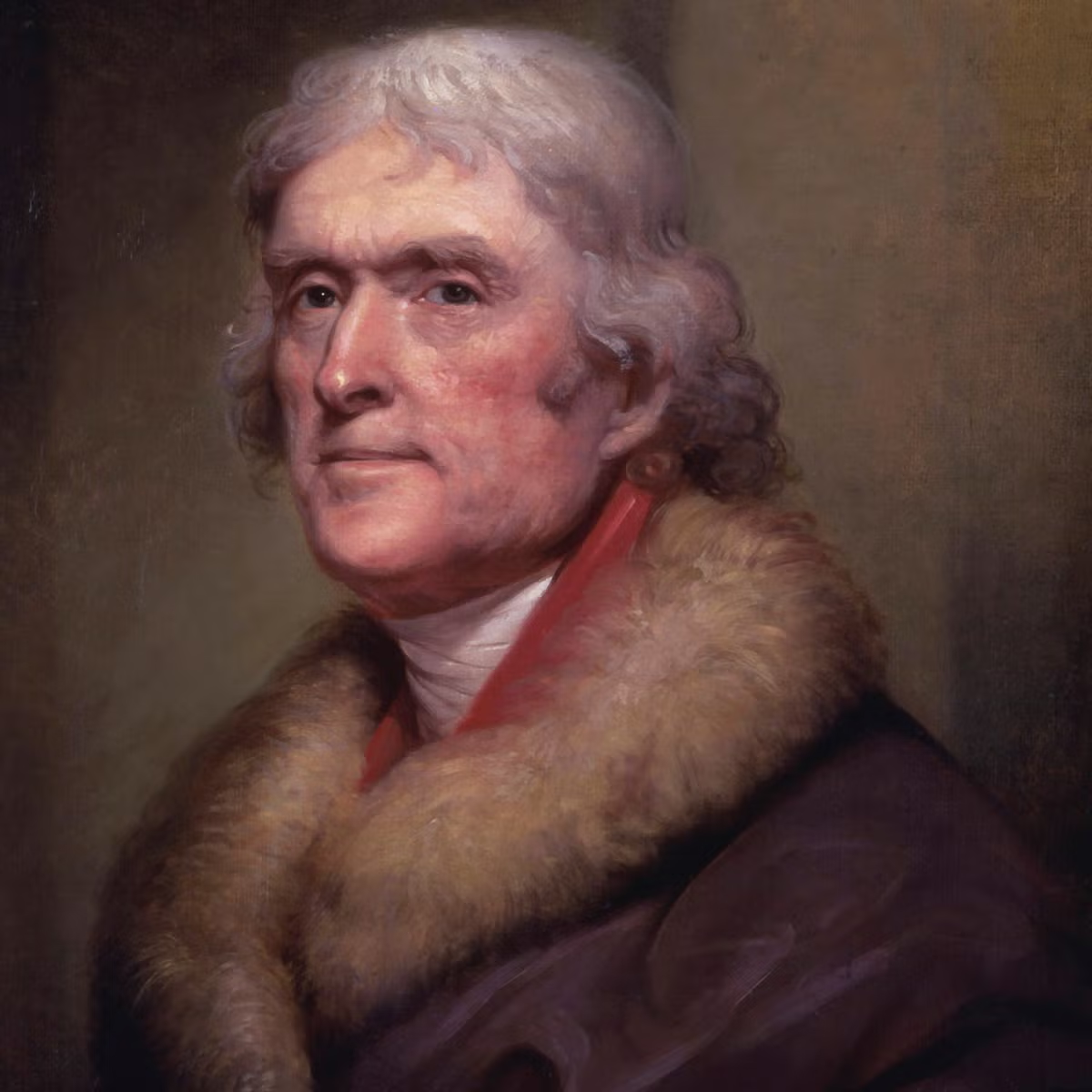
Thomas Jefferson: Advocate of the Louisiana Purchase

madtechventures.com – Thomas Jefferson, the third President of the United States, is often celebrated for his role in expanding the nation’s territory and strengthening its position on the world stage. Among his many contributions to American history, his advocacy for and successful negotiation of the Louisiana Purchase stands as one of the most significant. This acquisition, which doubled the size of the United States, transformed the nation’s geography, economy, and political landscape. Jefferson’s leadership in securing the Louisiana Territory from France in 1803 is considered one of the defining moments of his presidency and one of the most important achievements in American history.

While Jefferson’s vision for the United States was rooted in agrarianism, limited government, and individual liberty, the Louisiana Purchase was a bold and somewhat controversial move that would shape the nation’s future for generations. As an advocate of the purchase, Jefferson had to reconcile his strict interpretation of the Constitution with the opportunity to expand the country’s territory. His actions in this regard reveal much about his leadership and his commitment to the nation’s long-term growth and prosperity.

The Background: The Importance of the Louisiana Territory

The Louisiana Territory, named after King Louis XIV of France, was a vast expanse of land that stretched from the Mississippi River to the Rocky Mountains, and from the Gulf of Mexico to the Canadian border. It encompassed much of what is now the central United States, including the present-day states of Louisiana, Arkansas, Missouri, Iowa, Nebraska, and portions of several other states.

The region had been claimed by France but ceded to Spain in the aftermath of the French and Indian War (1754-1763). However, in 1800, Spain secretly transferred the land back to France under the Treaty of San Ildefonso. The news of this transfer was a cause for concern in the United States, particularly among those living along the Mississippi River and the port city of New Orleans, a vital hub for trade. The French government, led by Napoleon Bonaparte, was seen as a potential threat to American access to the Mississippi River, which was crucial for transporting goods from the western territories to the Gulf of Mexico.

The United States, which had recently emerged as a sovereign nation, relied heavily on its ability to freely navigate the Mississippi River for economic survival. Jefferson, who believed in the importance of agrarianism and saw farmers as the backbone of the nation’s economy, knew that securing access to this vital waterway was essential for the growth and prosperity of the United States. In this context, the acquisition of the Louisiana Territory became a priority for Jefferson and his administration.

Jefferson’s Vision: Agrarianism and Expansion

Jefferson’s vision for the United States was one of an agrarian republic, where small farmers played a central role in the nation’s economy and civic life. He believed that a decentralized government, limited in scope, would best serve the interests of a nation built on agricultural prosperity. Jefferson envisioned an expansive republic that could provide land to its citizens, enabling them to achieve independence and contribute to the country’s democratic ideals.

For Jefferson, the acquisition of the Louisiana Territory was in line with his larger goal of creating a nation of independent farmers who could cultivate the land and support the growth of democracy. The vast land area of the Louisiana Territory provided an opportunity for westward expansion, offering land to settlers and increasing the United States’ agricultural base. Jefferson believed that expanding the country’s borders would ensure its future economic stability and provide new opportunities for American farmers.

However, Jefferson faced a significant challenge in reconciling his vision for the nation with his strict interpretation of the Constitution. As a proponent of a limited federal government, Jefferson believed that the Constitution should be followed to the letter. The Constitution did not explicitly grant the federal government the power to acquire new territory, and Jefferson was wary of taking actions that might overstep the powers of the executive branch.

Despite his reservations, Jefferson recognized that the Louisiana Territory was too valuable to pass up, and the acquisition represented an unparalleled opportunity to secure the future of the United States. He also believed that acquiring the land would allow the United States to maintain its independence and avoid the geopolitical pressures from European powers, especially France and Britain, which were still engaged in conflicts over their respective empires.

The Negotiation of the Louisiana Purchase

In 1802, Jefferson instructed U.S. Minister to France, James Monroe, and his colleague, Robert Livingston, to begin negotiating with France for the purchase of the port of New Orleans. The port was of critical importance to American trade, as it was the point through which much of the agricultural produce from the western territories was shipped.

However, events took a surprising turn in 1803, when Napoleon Bonaparte, the French leader, decided that his empire in the Americas was no longer a priority. The French had faced numerous challenges in their colony of Saint-Domingue (present-day Haiti), where a slave revolt had led to the collapse of their colonial system. Napoleon, who had originally planned to build a French empire in the Americas, realized that maintaining control over the Louisiana Territory was no longer feasible.

In April 1803, the French government unexpectedly offered to sell not only New Orleans but the entire Louisiana Territory to the United States. The asking price was $15 million, a sum that was considered remarkably low for such a vast area of land. The deal would double the size of the United States, adding more than 828,000 square miles to the nation.

For Jefferson, the offer was both an opportunity and a dilemma. The acquisition of the Louisiana Territory would align with his vision for the nation’s expansion and the preservation of agrarianism, but it also posed a constitutional challenge. Jefferson was unsure whether the U.S. government had the legal authority to purchase such a vast territory, as the Constitution did not explicitly grant the power to acquire new land. However, after careful deliberation, Jefferson concluded that the benefits of the purchase outweighed the potential constitutional concerns.

On October 20, 1803, the Louisiana Purchase Treaty was signed, and the United States formally acquired the land from France. The purchase was ratified by the Senate in 1804, and the territory was officially transferred to the United States on December 20, 1803. The acquisition not only expanded the nation’s territory but also helped to secure its future as an agrarian republic.

The Impact of the Louisiana Purchase

The Louisiana Purchase had far-reaching consequences for the United States and its citizens. Geographically, it more than doubled the size of the country, giving the United States control over vast stretches of land, including the Mississippi River and the port of New Orleans. The acquisition opened up new territories for settlement and exploration, and it paved the way for westward expansion.

Jefferson’s vision of an agrarian republic was also realized through the purchase, as the land provided new opportunities for settlers to cultivate crops and build farms. The growth of American agriculture in the newly acquired territories contributed to the economic prosperity of the United States and helped solidify the nation’s identity as an agricultural power.

Politically, the Louisiana Purchase strengthened the United States by securing its independence from European powers. By acquiring the territory, the United States ensured that it would not be threatened by foreign intervention in its western territories. The purchase also set a precedent for future territorial expansion and the acquisition of new lands, which would continue to shape the nation’s growth in the 19th century.

However, the Louisiana Purchase was not without its challenges. The acquisition led to disputes over how the newly acquired land should be governed, and tensions over issues like slavery and the treatment of Native American populations would continue to shape American politics in the years to come.

Jefferson’s Legacy as Advocate of the Louisiana Purchase

Thomas Jefferson’s role in advocating for and securing the Louisiana Purchase solidified his place as one of the most important figures in American history. His leadership in this moment demonstrated his ability to navigate complex political, legal, and diplomatic challenges while remaining committed to his vision of a democratic, agrarian republic.

Although Jefferson’s decision to purchase the Louisiana Territory was a bold and, at the time, controversial move, it ultimately proved to be a defining moment in American history. The Louisiana Purchase expanded the nation’s territory, bolstered its economy, and helped to establish the United States as a dominant force in the Western Hemisphere.

In the years that followed, Jefferson’s actions in securing the Louisiana Territory would be celebrated as a triumph of American democracy, foresight, and vision. His advocacy for the purchase is a testament to his ability to adapt to changing circumstances and to make decisions that would shape the future of the United States for centuries to come.
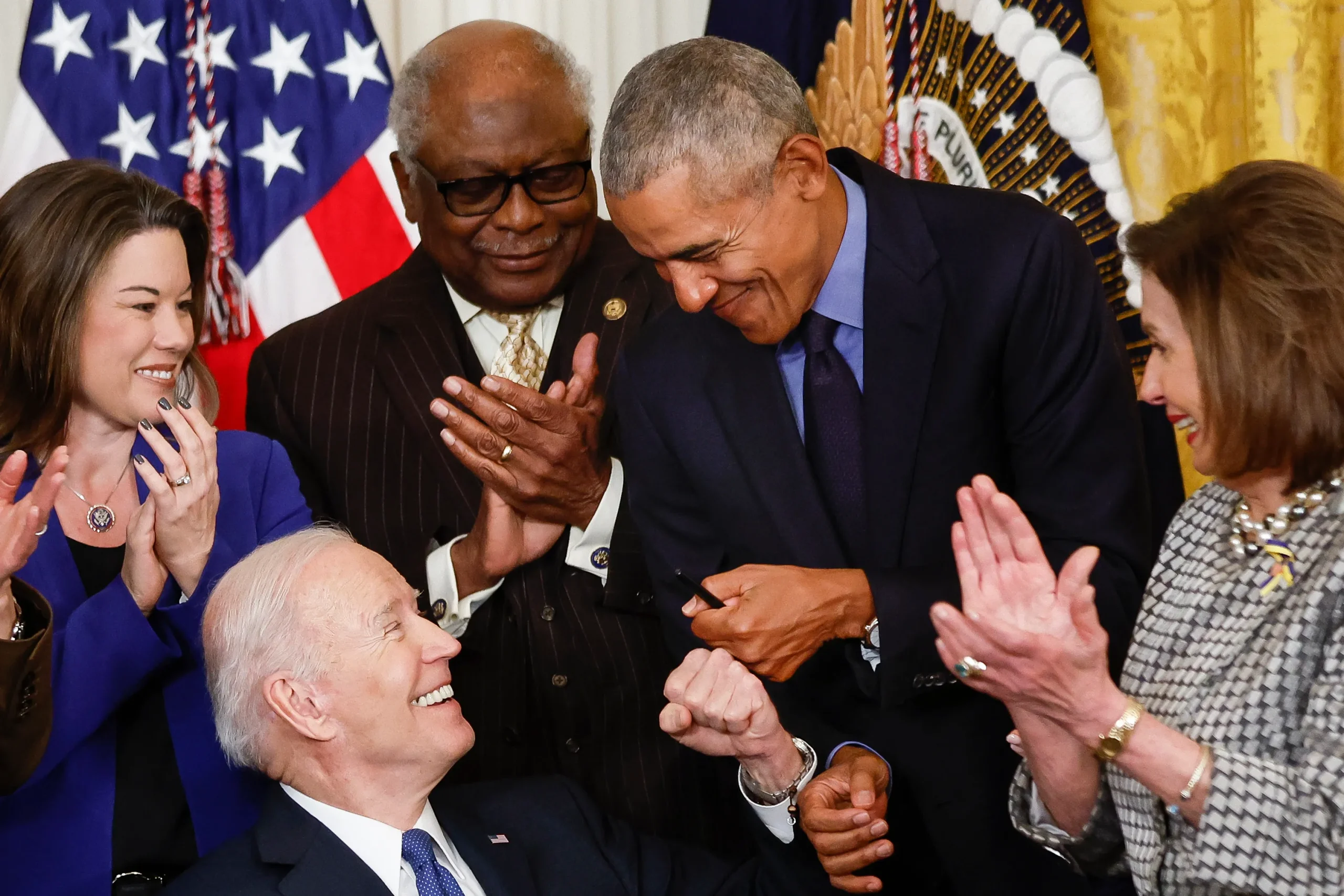
Joe Biden: Advocate for the Affordable Care Act (Obamacare)

madtechventures.com – Joe Biden, the 46th President of the United States, has long been an advocate for healthcare reform. Throughout his career, one of his most defining achievements and enduring political efforts has been his staunch support for the Affordable Care Act (ACA), also known as Obamacare. The ACA, signed into law by President Barack Obama in 2010, marked a landmark reform in the U.S. healthcare system. As Vice President during Obama’s first term, Biden played a critical role in supporting and advancing the ACA, and his continued advocacy for healthcare reform has been a central pillar of his political career.

Biden’s commitment to healthcare reform and the ACA was not just a matter of policy for him; it was a personal mission shaped by his life experiences, his understanding of the challenges facing ordinary Americans, and his dedication to ensuring that access to quality healthcare is a fundamental right. In this article, we explore Joe Biden’s role as an advocate for the Affordable Care Act, his leadership in pushing the law forward, and the ways in which he has continued to champion healthcare reform throughout his political career.

The Birth of the Affordable Care Act

The Affordable Care Act (ACA) was passed in 2010 during President Barack Obama’s first term in office. The law was designed to address the pressing issues of healthcare access, affordability, and quality in the United States. Prior to the ACA, millions of Americans lacked health insurance, while many others faced skyrocketing premiums, rising out-of-pocket costs, and limited access to necessary medical services.

One of the key goals of the ACA was to expand healthcare coverage to those who were uninsured or underinsured. It sought to reduce the number of uninsured Americans through Medicaid expansion, the creation of health insurance marketplaces, and by requiring insurers to cover individuals with pre-existing conditions. The ACA also aimed to make healthcare more affordable by implementing regulations that limited how much insurance companies could charge for coverage and by providing financial assistance to individuals who could not afford coverage on their own.

While the law’s passage was a monumental achievement for the Obama administration, it also faced intense opposition from Republicans and other critics who argued that it represented government overreach and would lead to higher healthcare costs. Despite this, the ACA became one of the defining accomplishments of Obama’s presidency, and Biden, as Vice President, was a key figure in advocating for its passage and defending it throughout the political battles that ensued.

Biden’s Role in the Passage of the ACA

As Vice President, Joe Biden played a crucial role in the passage of the Affordable Care Act. Biden, with his deep knowledge of the legislative process and decades of experience in the U.S. Senate, was a formidable force in advocating for the law. One of Biden’s most significant contributions was his ability to build bipartisan support for the ACA in Congress. While the law ultimately passed without Republican votes, Biden worked tirelessly to secure the votes of moderate Democrats and key swing states senators, ensuring that the ACA could navigate the complex and often contentious political environment.

Biden’s personal involvement in the legislative process was critical during the final push to pass the ACA. He worked behind the scenes with key senators, including those who were skeptical of the law, to address concerns and find compromises that would allow the bill to pass. His influence helped secure the necessary votes in both the Senate and the House, ultimately leading to the passage of the ACA on March 21, 2010.

Biden’s leadership and advocacy during the ACA’s passage were pivotal in making healthcare reform a reality. His deep understanding of the policy details, his relationship-building skills, and his determination to improve the lives of Americans helped push the law across the finish line.

The Impact of the Affordable Care Act

The Affordable Care Act represented one of the most significant shifts in U.S. healthcare policy in generations. Biden, who had been intimately involved in its passage, saw firsthand how the law changed the lives of millions of Americans. Under the ACA, over 20 million Americans gained health insurance coverage, many of whom had previously been denied coverage due to pre-existing conditions or could not afford private insurance. The ACA expanded Medicaid in many states, created state-based health insurance exchanges, and provided subsidies to make insurance more affordable.

Additionally, the ACA required insurers to cover essential health benefits, including preventive services, mental health care, and prescription medications. This expansion of coverage and services helped improve health outcomes for many Americans, particularly those in lower-income and vulnerable communities.

Another key provision of the ACA was the elimination of lifetime and annual coverage limits, which had previously left many Americans financially vulnerable. By guaranteeing that insurers could no longer deny coverage based on pre-existing conditions and by mandating coverage for essential services, the ACA was designed to create a more equitable and accessible healthcare system.

Biden’s support for the ACA has been consistent throughout his career, as he has witnessed its impact on the lives of millions of Americans. He has frequently cited stories of individuals and families who have benefited from the ACA’s protections, such as those who were able to access healthcare for the first time after years of being uninsured.

The Republican Opposition to the ACA

While the Affordable Care Act was a significant legislative victory for Democrats, it faced fierce opposition from Republicans who argued that it was an overreach of federal power and would lead to higher healthcare costs for Americans. Republican lawmakers attempted to repeal the law numerous times during Obama’s second term, with their most high-profile attempt coming in 2017 when Republicans in Congress sought to dismantle the ACA through the “skinny repeal” bill.

Throughout these efforts, Joe Biden stood firm in his support for the ACA. He not only defended the law’s benefits but also advocated for further improvements to the U.S. healthcare system. Biden argued that rather than repealing the ACA, lawmakers should work together to expand and improve it, particularly by lowering prescription drug prices and expanding Medicaid in states that had not yet accepted the program’s expansion.

Despite repeated attempts to dismantle the law, the ACA remained a crucial part of the U.S. healthcare landscape, thanks in part to Biden’s vocal defense and advocacy. Biden’s unwavering support for the ACA made him a champion of healthcare reform, earning him a reputation as one of the law’s strongest proponents.

Biden’s Continued Advocacy for Healthcare Reform as President

As President of the United States, Joe Biden has continued to prioritize healthcare reform. In his first year in office, Biden took several steps to build on the foundation of the ACA. His administration worked to expand access to health insurance by reopening the Health Insurance Marketplace for a special enrollment period, which allowed more Americans to sign up for coverage during the COVID-19 pandemic. Biden’s American Rescue Plan, signed into law in March 2021, included provisions to make healthcare coverage more affordable by increasing subsidies for marketplace plans, reducing premiums for millions of Americans, and expanding Medicaid in some states.

Additionally, Biden has pushed for further reforms aimed at lowering prescription drug prices, expanding Medicaid in all states, and tackling health inequities. Biden has consistently emphasized the importance of providing affordable healthcare to every American, calling healthcare access a “right, not a privilege.” Biden’s presidency has reaffirmed his long-standing commitment to expanding healthcare access and ensuring that the ACA’s protections remain in place.

In his role as President, Biden has also pushed for the expansion of public healthcare options, such as a public option, which would allow Americans to choose a government-run health plan in addition to private insurance. While the public option has not yet passed, Biden’s continued advocacy for expanding healthcare access and addressing affordability remains a top priority for his administration.

Conclusion

Joe Biden’s advocacy for the Affordable Care Act has been a defining feature of his political career. From his instrumental role in passing the law as Vice President to his continued efforts to expand healthcare access as President, Biden has been a steadfast champion for healthcare reform. The ACA has had a profound impact on millions of Americans, expanding access to healthcare, improving services, and making coverage more affordable.

Biden’s commitment to the ACA and healthcare reform is driven by his deep belief that all Americans deserve access to quality, affordable healthcare. As both a politician and a leader, Biden has worked tirelessly to ensure that healthcare remains a central issue in the national conversation. As President, he continues to fight for the expansion and improvement of healthcare coverage, striving to build on the progress made through the Affordable Care Act and ensuring that all Americans have the ability to get the care they need to live healthy, fulfilling lives.