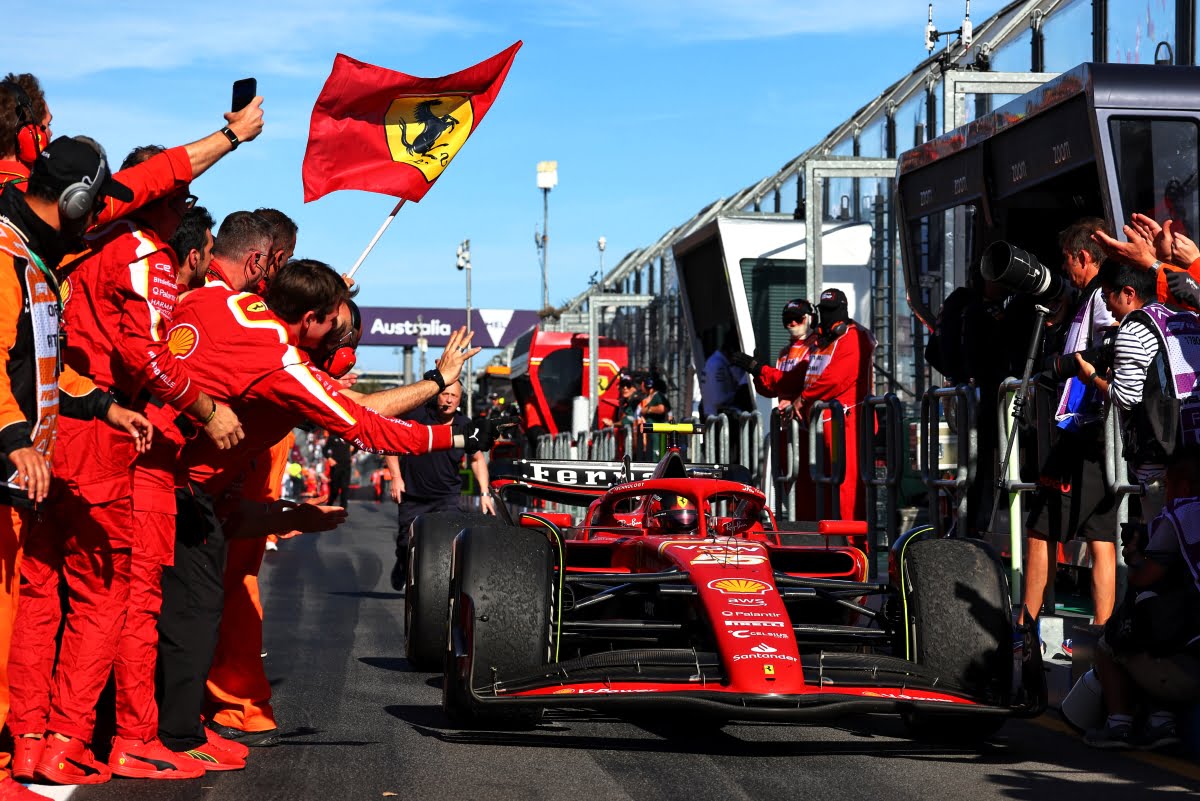
madtechventures.com – Ferrari, one of the most iconic names in motorsport, has been synonymous with Formula 1 since the championship’s inception. As the only team to have competed in every season of the sport since 1950, Ferrari’s legacy is unmatched, with a history filled with glorious victories, legendary drivers, and engineering brilliance. However, alongside their success, Ferrari has also experienced periods of decline, where their dominance was challenged, and their reputation came under scrutiny. This article explores the rise and fall of Ferrari in Formula 1, tracing the team’s highest moments and its most difficult times.
Ferrari’s Early Dominance
Ferrari entered the first-ever Formula 1 World Championship season in 1950, and by the following year, they claimed their first victory. The 1950s were a golden era for Ferrari, with drivers like Alberto Ascari leading the charge. Ascari won back-to-back world championships in 1952 and 1953, cementing Ferrari’s position as a dominant force in the early years of the sport.
During this period, Ferrari’s V12 engines were revered for their power and reliability, giving the team a crucial edge over their competitors. As Formula 1 became more global, Ferrari continued to be a front-runner, attracting top drivers and engineers eager to be part of the team’s legacy.
The 1960s: A New Era of Challenges
The 1960s brought both triumphs and difficulties for Ferrari. The team faced growing competition from British manufacturers like Lotus and Cooper, who introduced revolutionary rear-engine designs that changed the dynamics of F1 racing. While Ferrari managed to win the constructors’ championship in 1961 with Phil Hill becoming world champion, they struggled to maintain the same level of dominance as their rivals began innovating rapidly.
Internal conflicts within Ferrari, including disputes between Enzo Ferrari and key team members, led to several high-profile resignations, which further destabilized the team. Despite this, Ferrari continued to compete at a high level, with occasional victories, but they were no longer the undisputed kings of the grid.
The Lauda Years and Resurgence in the 1970s
The 1970s marked a period of resurgence for Ferrari, thanks largely to the arrival of Austrian driver Niki Lauda. Lauda, known for his technical expertise and analytical approach, helped Ferrari return to the top of Formula 1. In 1975, Lauda won his first world championship, and Ferrari secured the constructors’ title, marking a triumphant return to dominance.
Lauda’s infamous crash at the 1976 German Grand Prix, where he suffered severe burns, could have ended his career, but he made a miraculous comeback just weeks later. Although Lauda narrowly missed out on the 1976 championship, he reclaimed the title in 1977, solidifying Ferrari’s place as a dominant force once again.
The Schumacher Era: Ferrari’s Peak
Ferrari’s most successful period came in the late 1990s and early 2000s, during the era of Michael Schumacher. Schumacher, widely regarded as one of the greatest drivers in history, joined Ferrari in 1996. Alongside technical director Ross Brawn and designer Rory Byrne, Schumacher built a formidable team that would dominate the sport for the next several years.
From 2000 to 2004, Ferrari won five consecutive constructors’ championships, and Schumacher claimed five drivers’ titles in a row, bringing his total to seven. Ferrari’s combination of exceptional engineering, a highly skilled pit crew, and Schumacher’s relentless driving ensured they were virtually unbeatable during this period. Ferrari set numerous records for race wins and podium finishes, and their dominance became the defining narrative of F1’s early 2000s.
The Decline in the 2010s
After Schumacher’s departure from Ferrari in 2006, the team continued to compete at a high level, but the golden era had passed. Kimi Räikkönen won the drivers’ championship in 2007, providing Ferrari with their last title for over a decade. While Ferrari remained competitive, they struggled to adapt to the sport’s shifting dynamics, particularly as teams like Red Bull Racing and Mercedes began to rise.
The introduction of hybrid power units in 2014 marked the start of Ferrari’s decline in terms of championship contention. Mercedes dominated the hybrid era, while Ferrari faced challenges with reliability, strategy, and internal leadership. Despite having talented drivers like Fernando Alonso and Sebastian Vettel, Ferrari couldn’t break Mercedes’ stranglehold on the sport.
The pressure of competing with the likes of Mercedes took its toll on Ferrari, leading to frequent management changes and a lack of consistency in performance. Ferrari fans, known for their passion and loyalty, grew increasingly frustrated as the team’s hopes of returning to championship-winning form seemed distant.
The 2020s: A Period of Rebuilding
Ferrari entered the 2020s with renewed optimism, driven by a young and promising driver lineup of Charles Leclerc and Carlos Sainz. After a disappointing 2020 season, where Ferrari finished sixth in the constructors’ standings, the team began rebuilding both its technical and managerial structures.
Under the leadership of team principal Mattia Binotto, Ferrari invested in new facilities, improved their power unit, and focused on long-term development. While they are yet to return to the heights of their Schumacher-era dominance, the team has shown signs of progress, finishing near the top of the midfield and challenging for podiums more regularly.
Conclusion
Ferrari’s journey in Formula 1 has been one of both incredible triumphs and heartbreaking struggles. From the early dominance of the 1950s to the peak of the Schumacher years, Ferrari has experienced the highest levels of success in motorsport. However, their journey has also been marked by periods of decline, where internal conflicts, changing regulations, and fierce competition have tested the team’s resilience.
As Ferrari continues to evolve in the modern era, the hope of returning to championship glory remains strong. While the rise and fall of Ferrari is a recurring theme in Formula 1, one constant endures: the team’s unwavering commitment to excellence and its iconic status as one of the greatest names in motorsport.