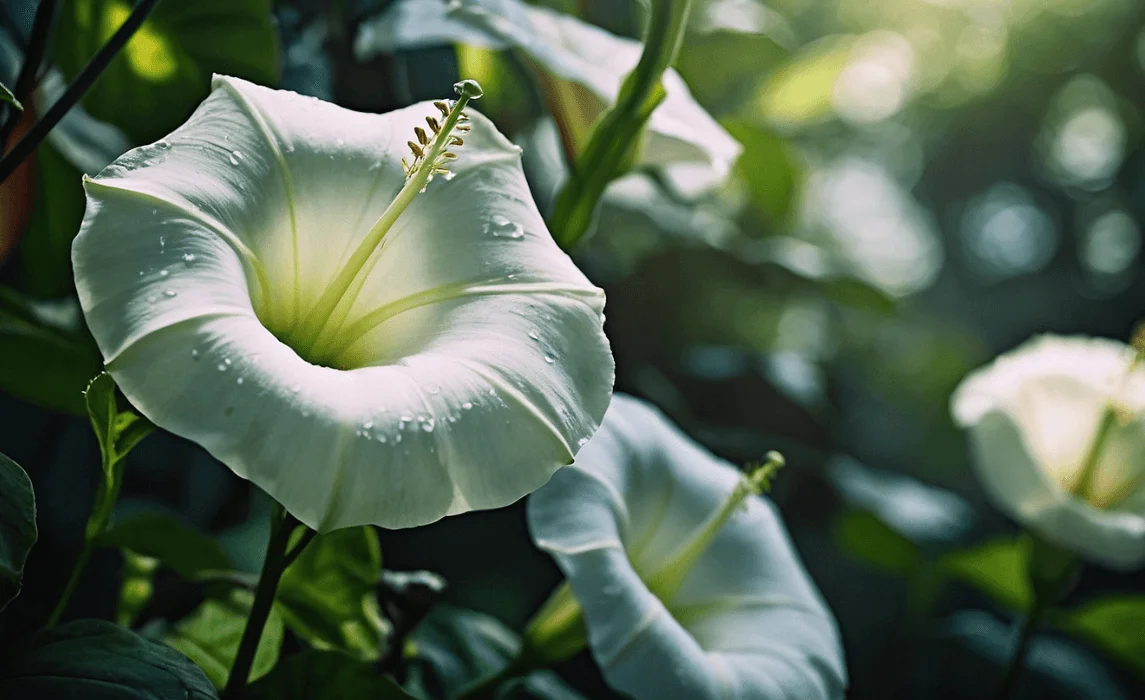
madtechventures.com – The Moonflower, known for its captivating blooms that unfurl under the cover of darkness, is a fascinating plant that brings a touch of magic to gardens and landscapes. With its large, fragrant white flowers, this plant captures the attention of anyone lucky enough to witness its evening display. Moonflowers, often associated with mystery and romance, offer more than just visual appeal—they hold a place in history, culture, and ecology.
What is a Moonflower?
The Moonflower (Ipomoea alba) is a night-blooming vine that belongs to the Convolvulaceae family, which also includes morning glories. Unlike morning glories, which bloom during the day, Moonflowers open their large, white blossoms at dusk, releasing a sweet fragrance that attracts nocturnal pollinators, including moths and other insects. The flowers typically measure between 4 to 6 inches in diameter, and their pure white petals glow in the moonlight, giving them their name.
Moonflowers are native to tropical and subtropical regions of the Americas but have been cultivated and admired worldwide for their beauty and unique blooming pattern.
Characteristics of Moonflower Flowers
Moonflower flowers are easily recognizable due to their large, trumpet-shaped blooms. They are typically white, but some varieties may have a slight hint of pale lavender or cream. The flowers open in the late afternoon or evening and remain open throughout the night, closing up by morning. This nocturnal blooming pattern makes Moonflowers a perfect addition to evening gardens or any space where they can be admired during the night hours.
Aside from their captivating beauty, Moonflowers also have a sweet, subtle fragrance that fills the air after dusk, making them a favorite of gardeners and nature lovers. The vines themselves are fast-growing and can reach up to 15 feet in height, making them ideal for trellises, fences, or arbors.
Growing Moonflower Flowers
Moonflowers are relatively easy to grow, though they do best in warm climates where the growing season is long enough for their vines to reach full maturity. They thrive in full sun but can tolerate partial shade, particularly in the morning hours. They require well-drained, fertile soil and need regular watering to maintain healthy growth, although they are somewhat drought-tolerant once established.
Here are some tips for growing Moonflowers:
- Planting: Start Moonflower seeds indoors 6-8 weeks before the last expected frost date or plant them outdoors once the soil has warmed. If planting seeds directly outdoors, sow them after all danger of frost has passed.
- Location: Choose a location with full sun to partial shade, and provide vertical support for the vines to climb, such as a trellis, fence, or wall.
- Watering: Keep the soil evenly moist, especially during the growing season, but avoid waterlogging, as this can lead to root rot.
- Fertilizing: Moonflowers benefit from a light application of balanced fertilizer in the spring, but excessive fertilization can lead to more foliage than flowers.
- Pruning: To maintain the plant’s shape and encourage more blooms, prune the vines regularly throughout the growing season. You can also trim dead or spent flowers to improve the overall appearance.
Symbolism and Cultural Significance
Moonflowers have long been associated with mystery, beauty, and the nighttime. In many cultures, these flowers represent the cyclical nature of life, as they bloom and wither with the rhythm of the moon. Their connection to the moon has made them symbols of transformation and rebirth, with some believing that the flower holds mystical or magical properties.
In Victorian flower symbolism, Moonflowers were associated with “beauty in secret” or “dreams” because of their nocturnal blooming. The flowers were often given as gifts to convey a sense of admiration for the quiet, hidden beauty of the night.
Ecological Importance of Moonflowers
Beyond their beauty and symbolism, Moonflowers also serve an important ecological role. Their evening blooms attract moths and other nocturnal pollinators, contributing to the health of local ecosystems. The plant’s nectar provides a food source for these pollinators, while the vines offer a place of shelter for various insects.
Additionally, Moonflowers can be an excellent choice for attracting beneficial insects to the garden. By incorporating Moonflowers into your landscape, you can help promote biodiversity and support nocturnal pollination, which is critical for the health of many plants.
Conclusion
Moonflowers are more than just a visual delight; they offer fragrance, symbolism, and ecological value. Whether planted in a moonlit garden, as a climbing vine on a trellis, or as part of a larger landscape, Moonflowers are sure to add an element of magic and wonder. Their striking beauty and nighttime bloom patterns make them a perfect addition for those looking to create a garden that celebrates the mysteries of the night.